

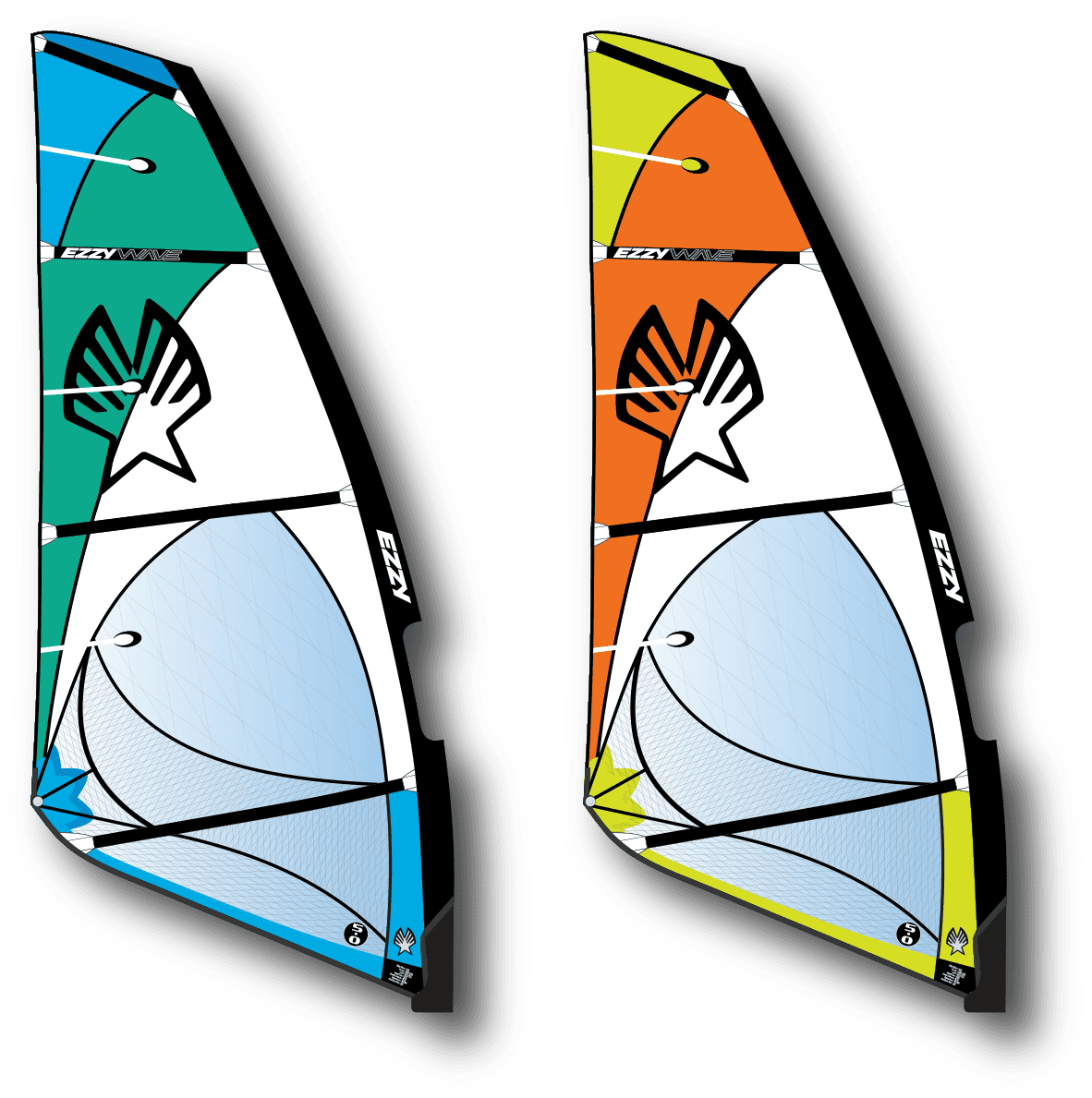
Over 40 Years of Wave Performance
Born on Maui in 1983, the Ezzy Wave has spent four decades evolving under David Ezzy’s hands. What began as a single prototype has been continually refined for strength, control, and handling in the world’s heaviest wave conditions.
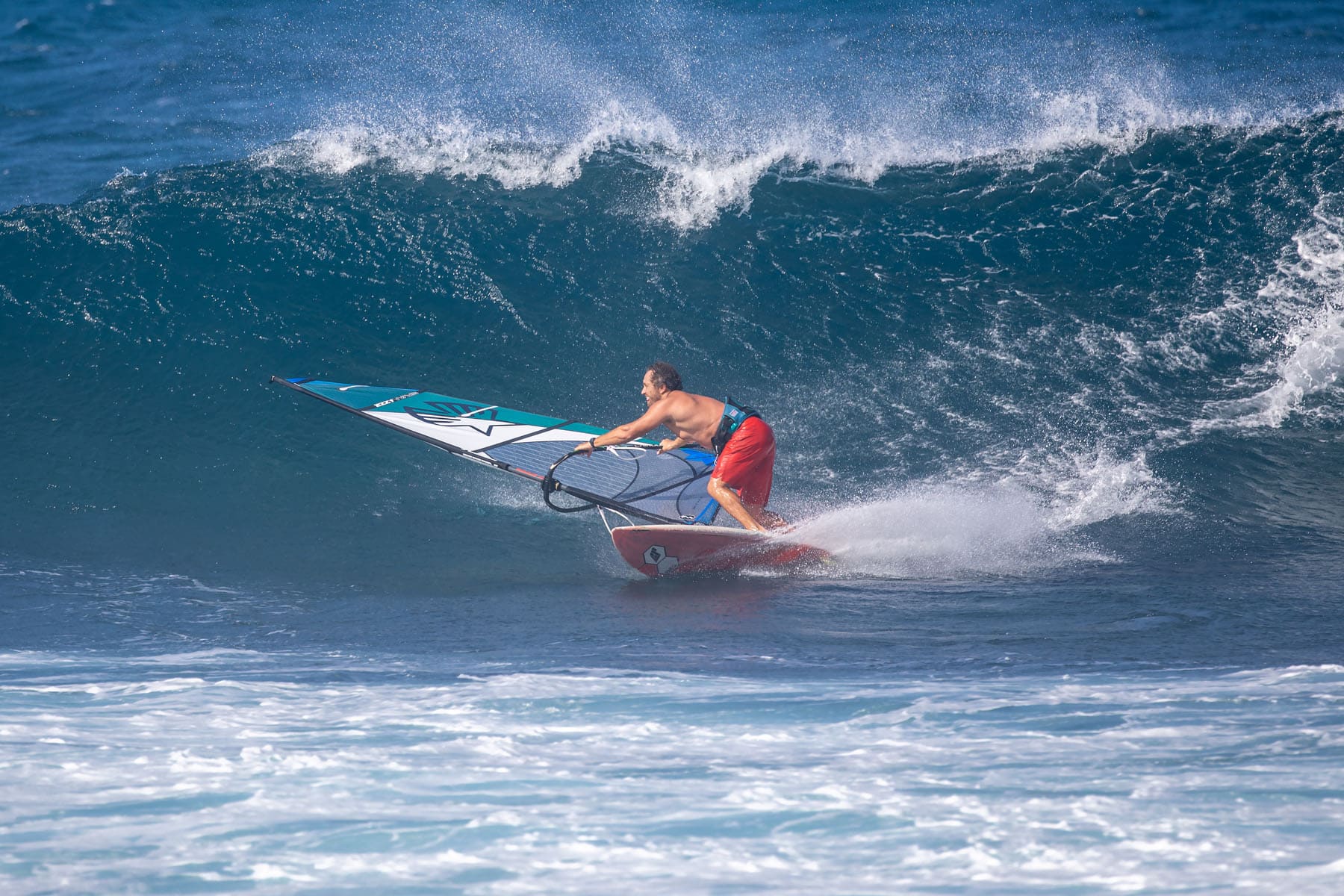
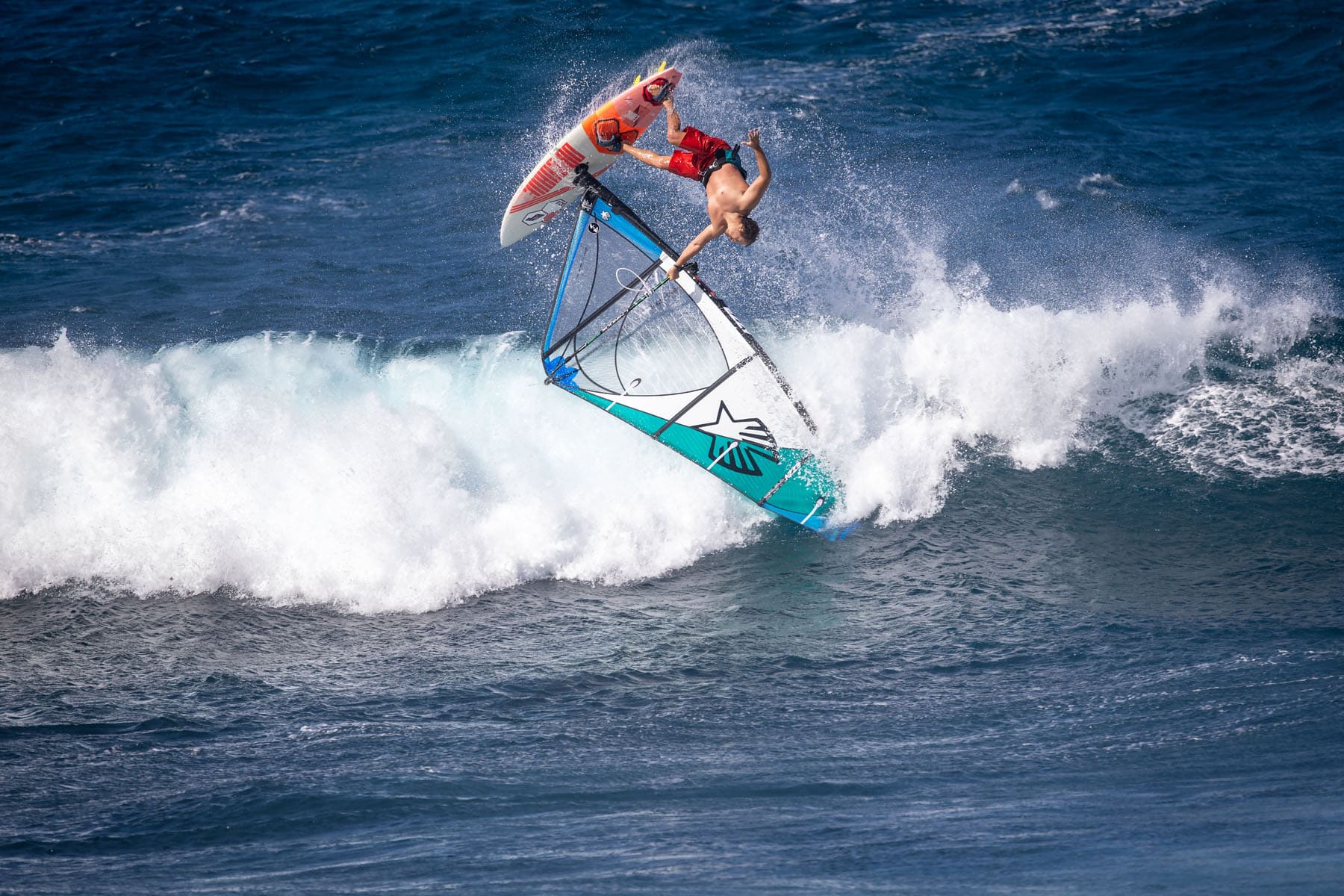
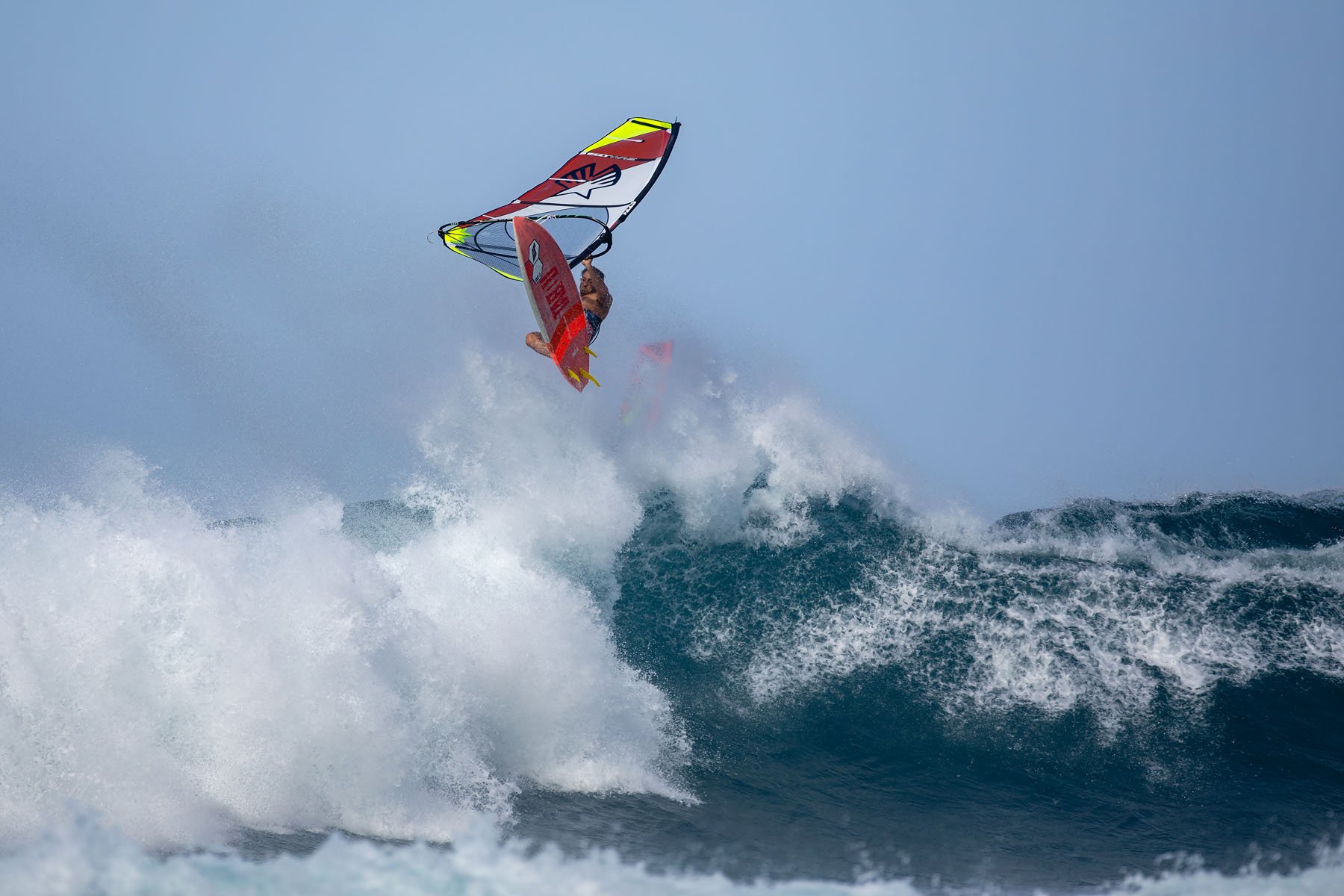
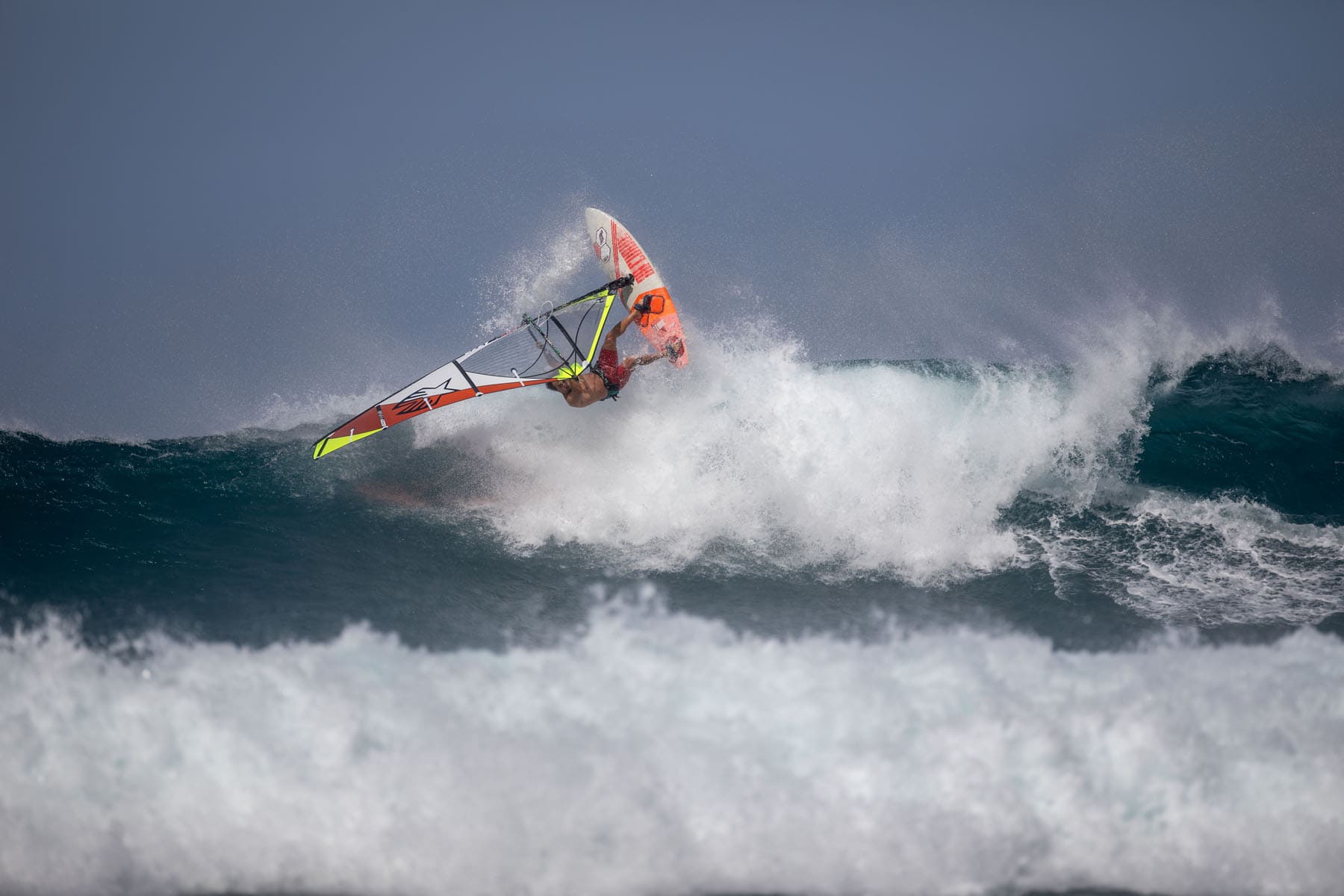
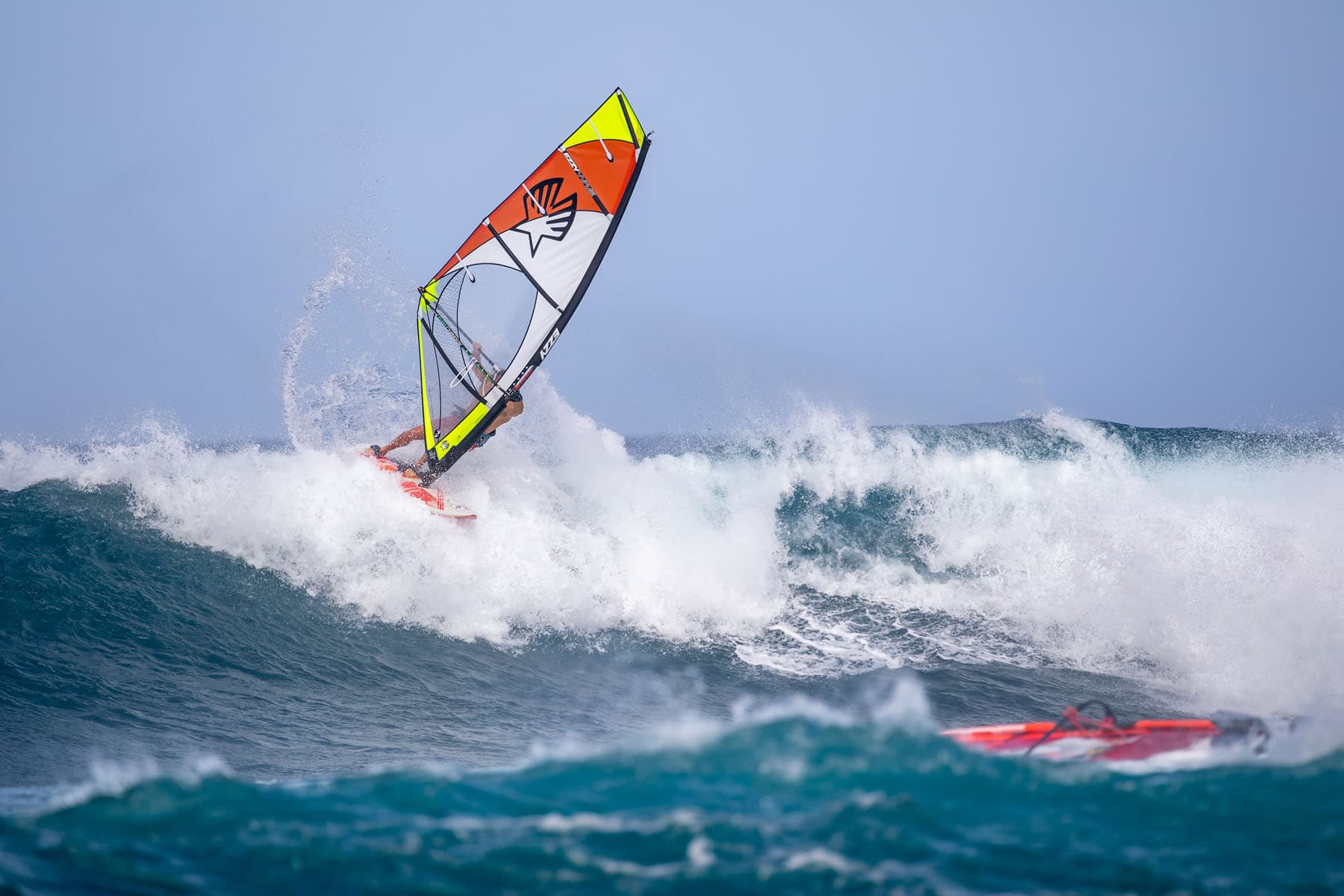
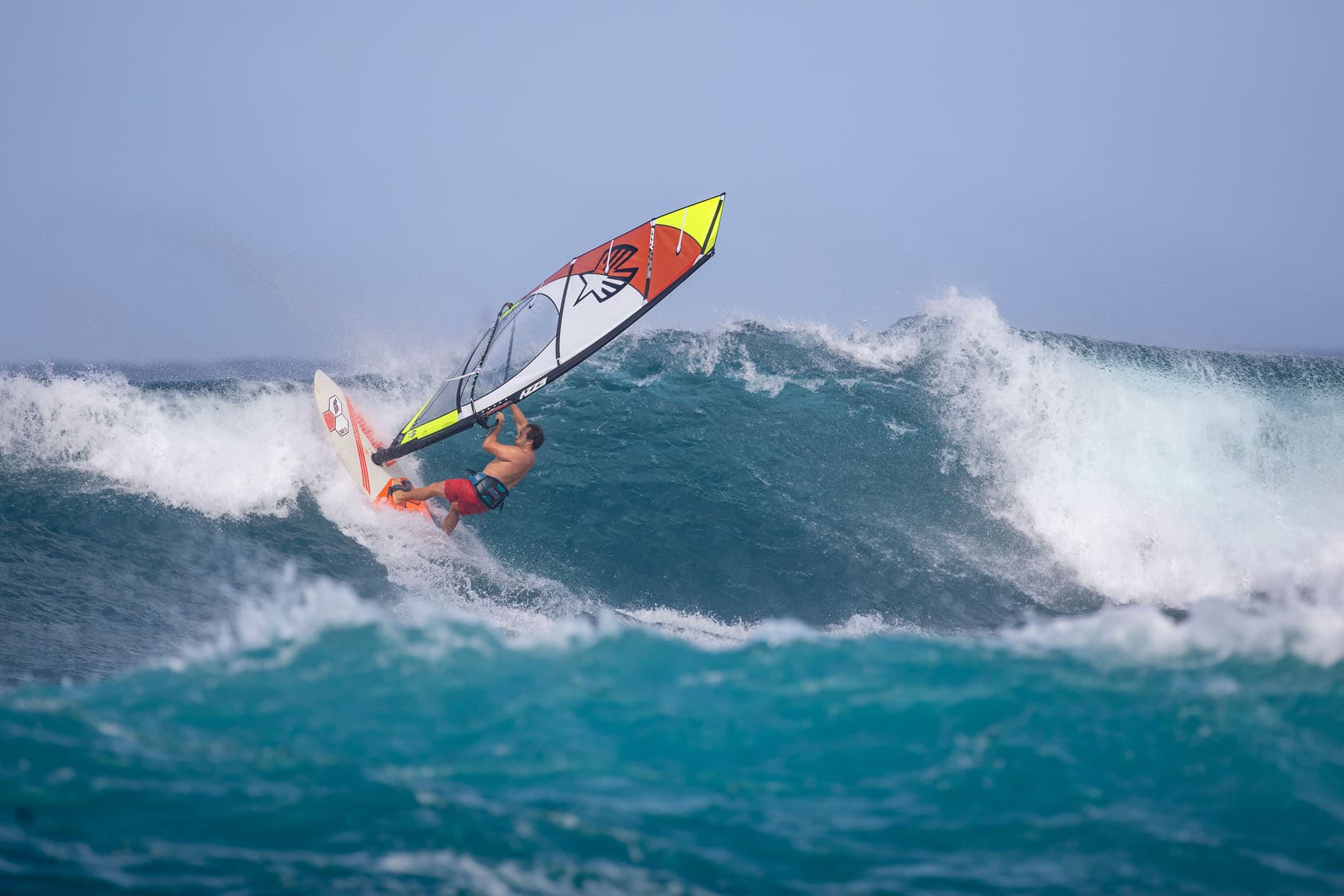
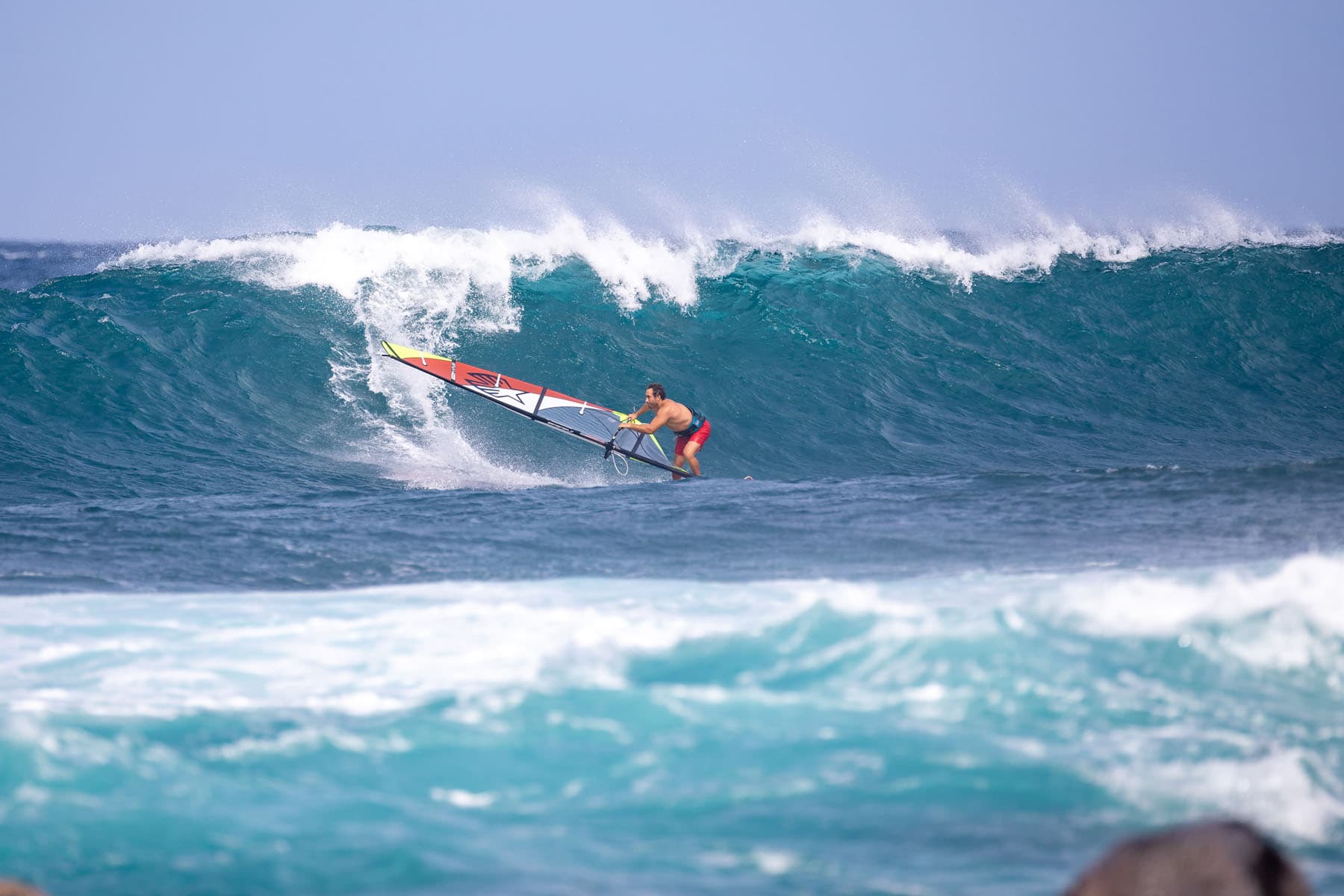
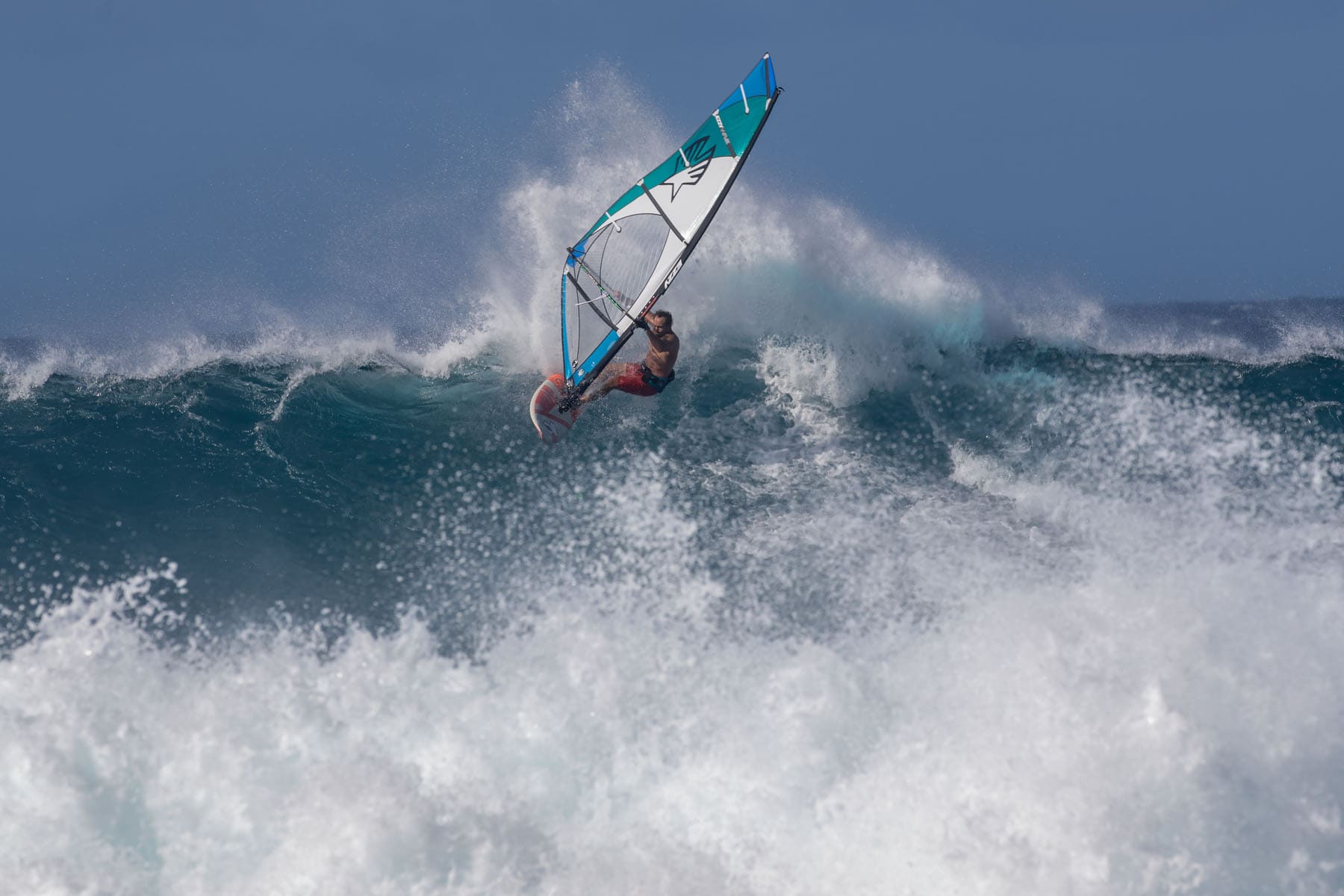
Proven at Ho‘okipa
Ho‘okipa’s mast-high walls, sharp reef, and gusty trades are the ultimate test. The Ezzy Wave is built here and tested here—light in the hands, confident through wipeouts, and balanced through every turn.
Designed for Real Conditions
- Power & Stability — Reduced luff curve drives forward and stays composed in gusts.
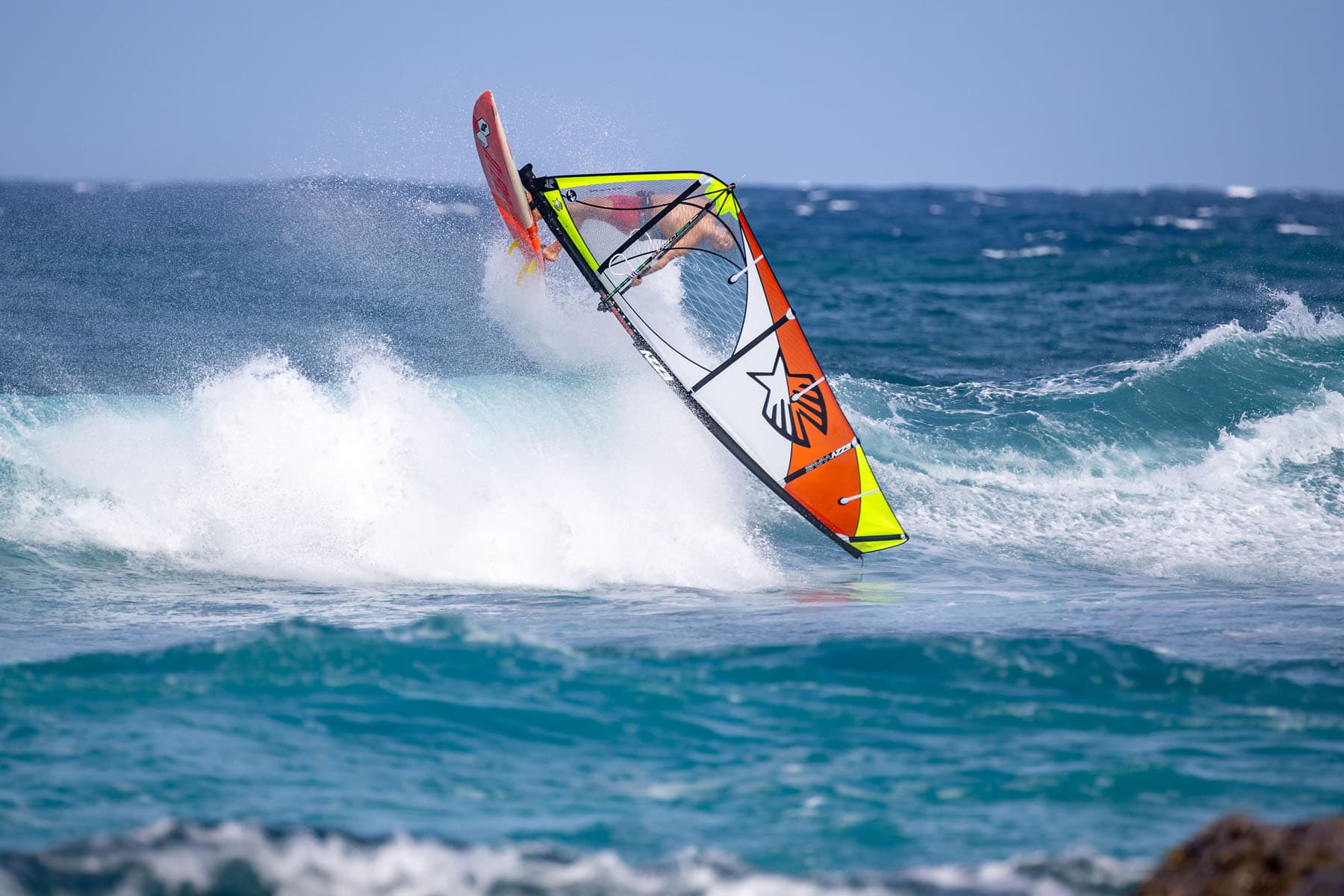
- Smooth Handling — Pulled-back battens for instant depower and effortless flips.
- Balanced Feel — Extended clew on small sizes stays steady in jumps and landings.
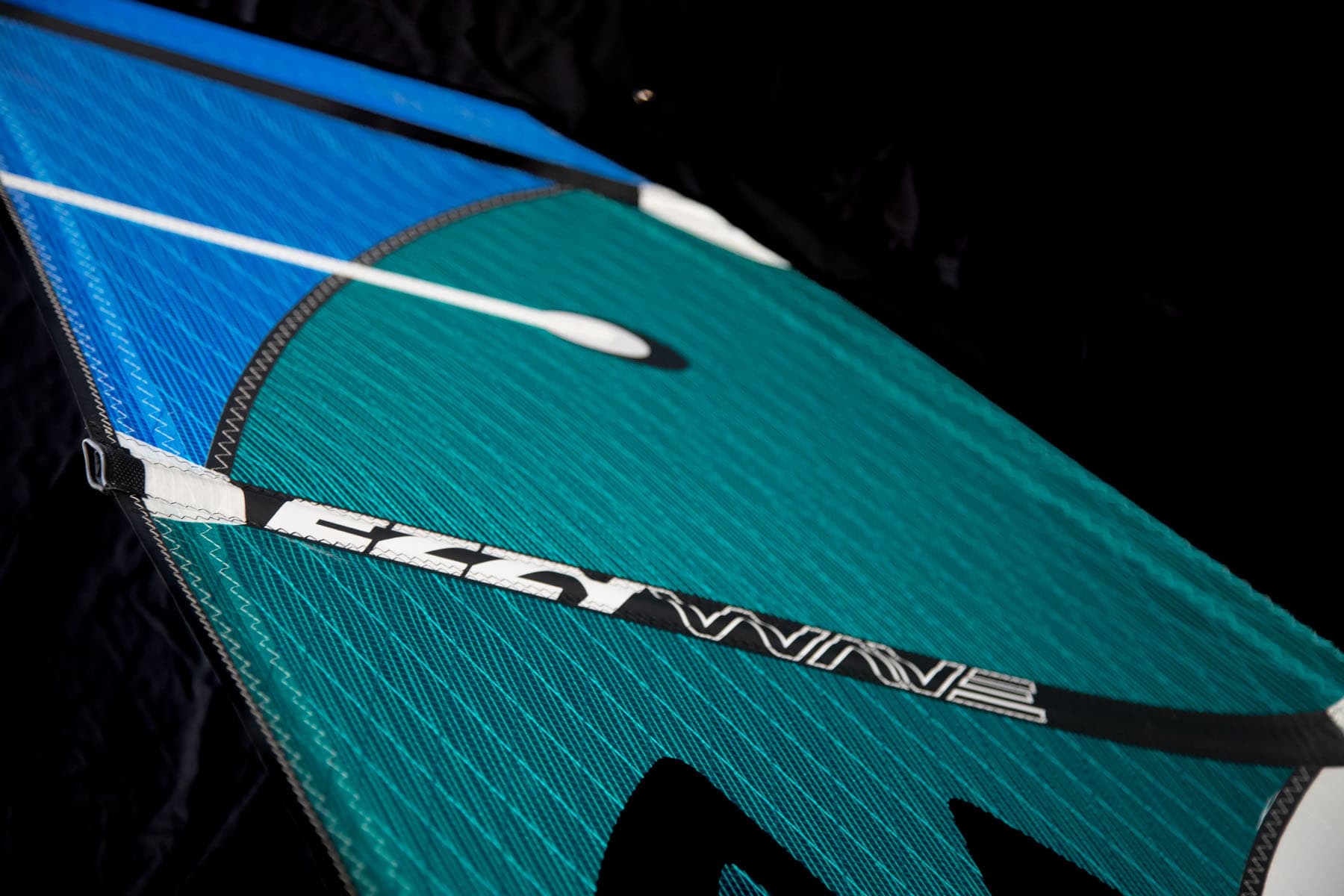
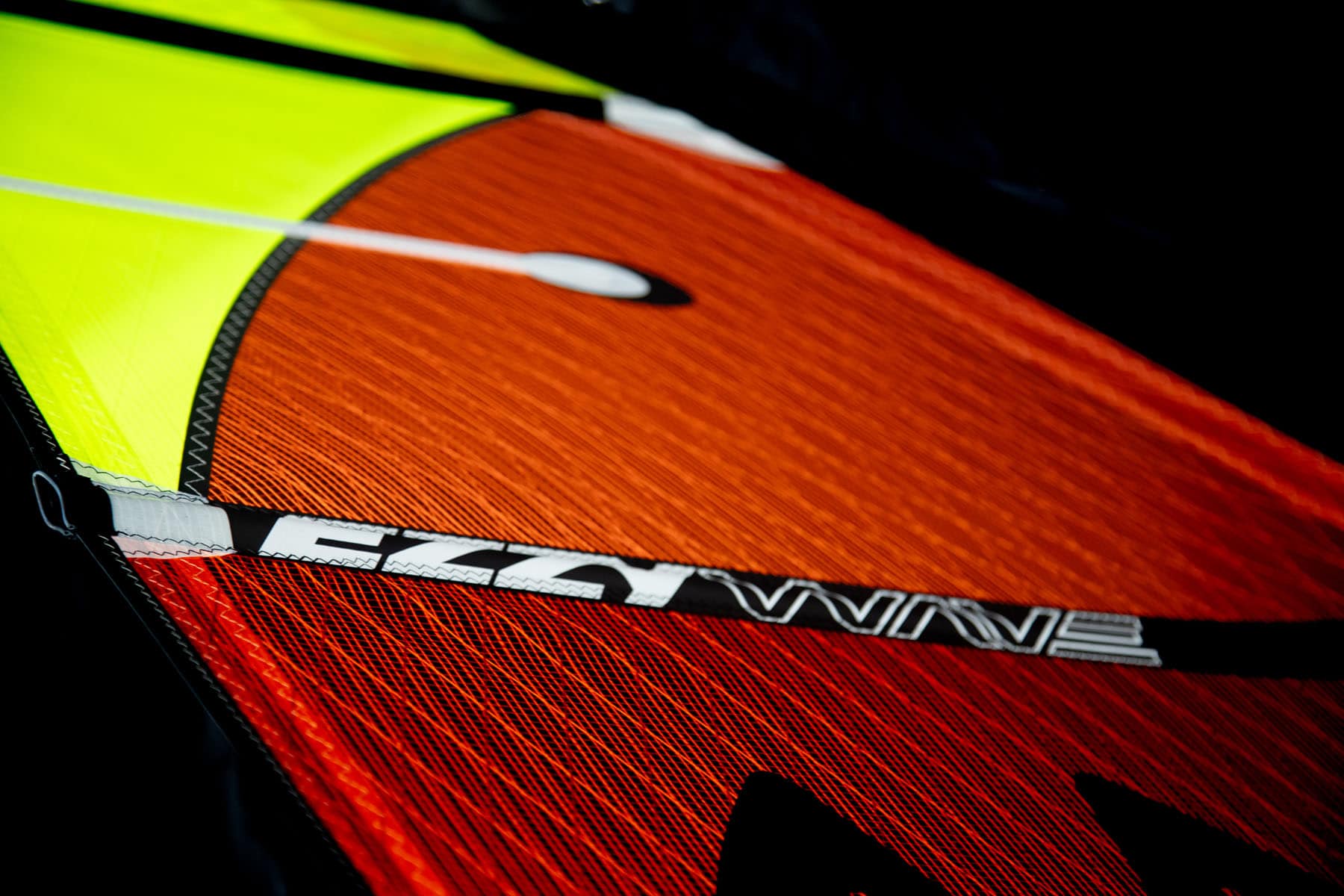
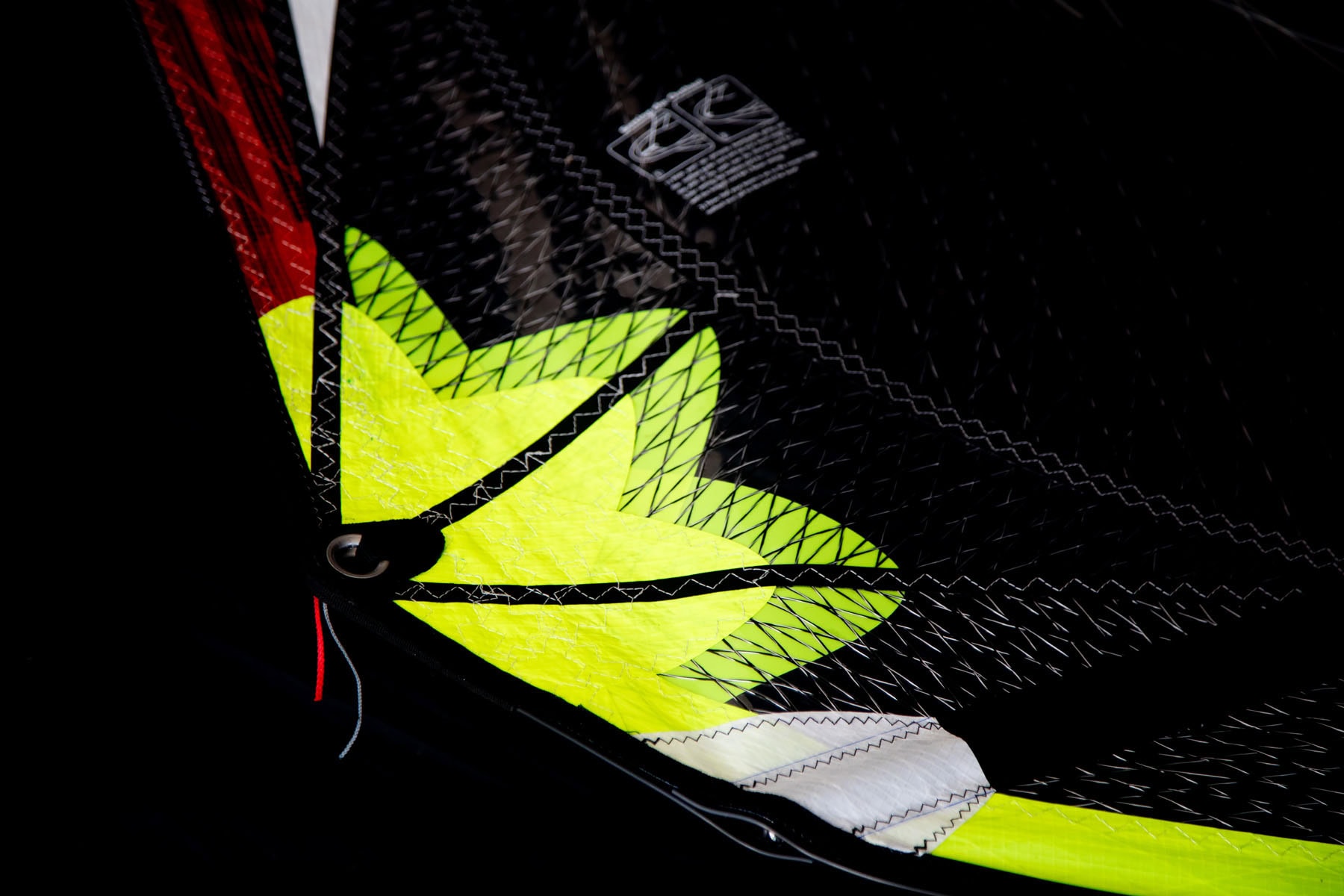
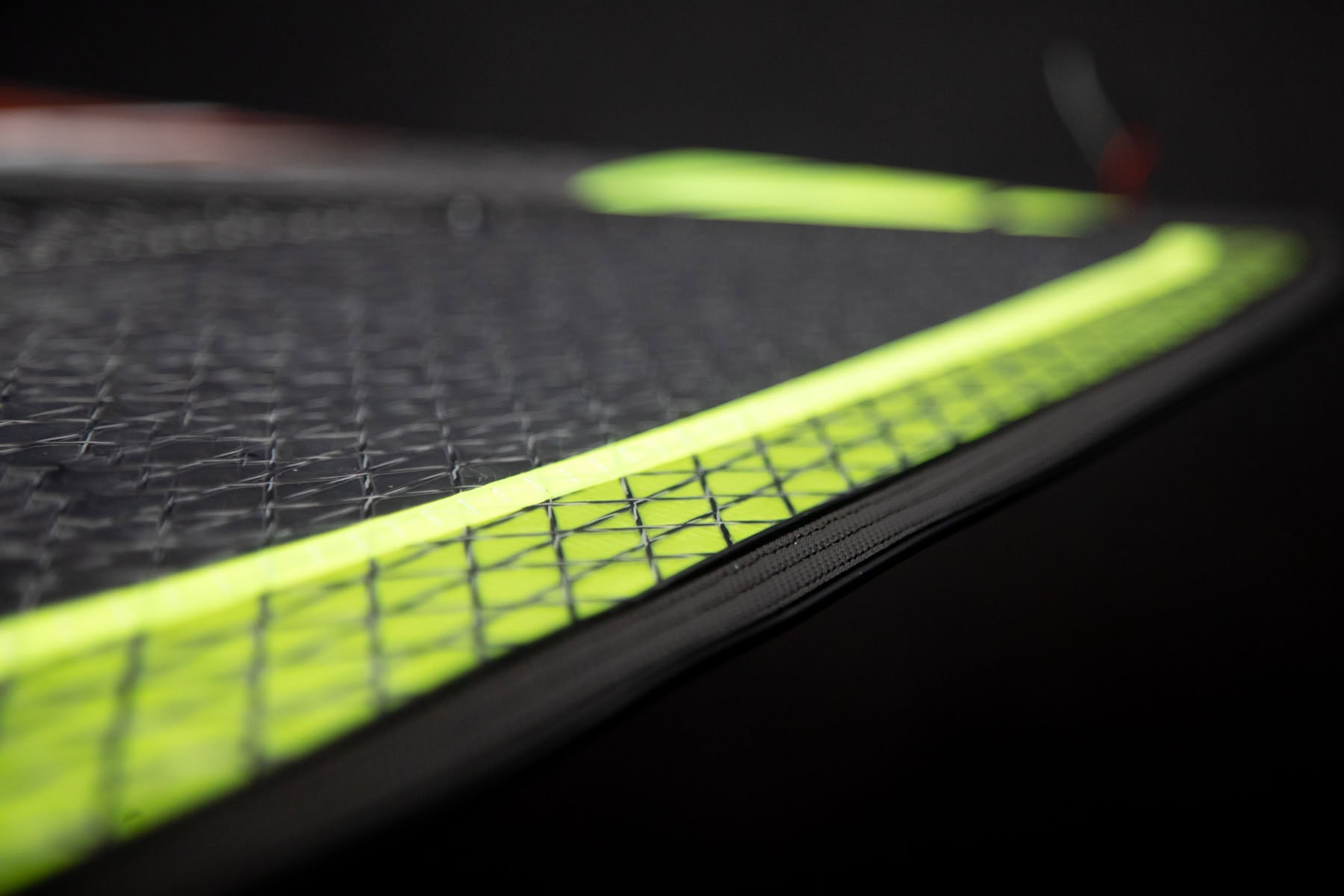
- Bombproof Build — Dyneema X-ply and high-strength scrim yarns mean lighter weight and longer life.
Rigged. Tuned. Verified.
Every Ezzy Wave is rigged and calibrated in our factory. Downhaul settings are measured on a load cell so your setup is precise from the very first session.
40 Years Later
From Ho‘okipa to your home break, the Ezzy Wave delivers the control, power, and durability that riders have relied on for over four decades.
FEATURES
Lightweight
The Ezzy Wave is one of the lightest wave sails in the world.
This translates into a more responsive feel, easier handling, and quicker reactions in every maneuver.
Power + Control
Designed for confidence in demanding conditions, the Ezzy Wave delivers the drive, stability, and precision that let you push harder and sail more aggressively.
Reduced Luff Curve
A refined luff curve creates forward drive and a locked-in feel through gusts, bottom turns, and transitions.
More speed when you want it, more control when you need it.
Faster Depower + Cleaner Rotation
Battens are subtly pulled back from the luff.
This is a detail you might not notice visually, but you will feel it immediately:
- Faster depower
- Cleaner rotation
- Effortless flipping in transitions
Smaller Sizes = More Stability
4.0 and smaller sizes feature an extended clew for improved balance in high wind.
This adds stability for:
- Jumping
- Landings
- High-wind control
Larger Window
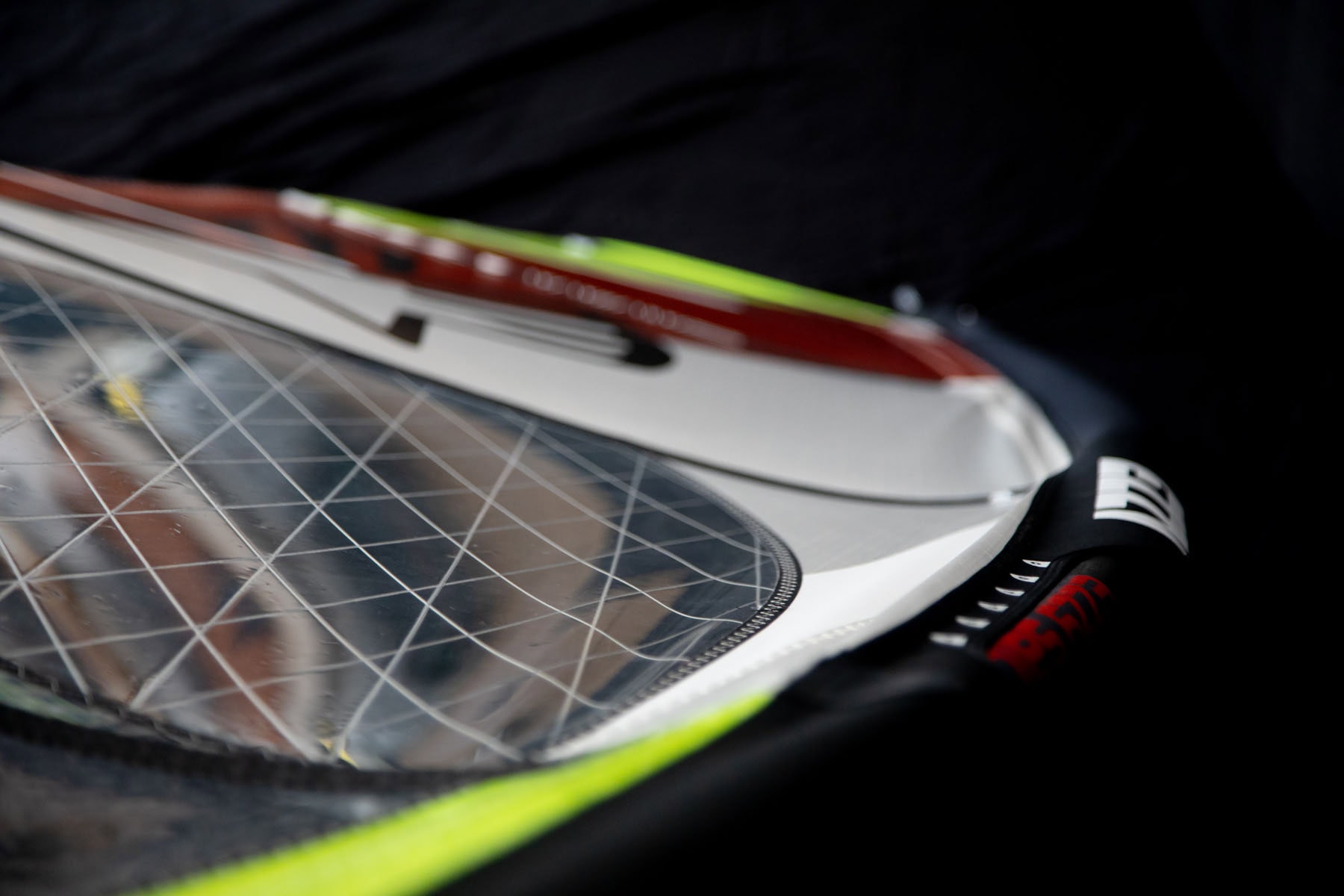
A larger window panel offers increased visibility down the line and across the wave face.
This reduces blind spots and helps you make faster, more confident decisions in critical moments.
QUALITY YOU CAN TRUST
Quality is more than durability—it is peace of mind.
It means you can sail harder, in bigger surf, and in more critical locations because your gear will not let you down.
And when it is time to upgrade, Ezzy resale value helps fund your next quiver.
HOW WE BUILD QUALITY
Design & Materials
The Ezzy Wave is engineered to survive real-world wave sailing:
- Rocks, reefs, and coral
- Shorebreak and big surf
- Constant impact and UV exposure
We control every variable:
• Every panel, seam, and reinforcement is built from decades of sailmaking experience.
• When the right material does not exist, we create it—like our low-friction Ezzy pulley system.
• Materials are tested for strength and spec accuracy when they arrive.
• Construction is double-checked and triple-checked throughout the build.
• Every sail is fully rigged, inspected, and batten-tuned before it leaves the factory.
In-House Manufacturing
Most brands outsource production.
We do not.
David Ezzy built the Ezzy Sails Factory in 1994 to control every step from raw materials to final rigging.
This is why when you unroll a new Ezzy Wave, it is ready to sail—no guesswork, no surprises.
CALIBRATED RIGGING
Good conditions do not wait.
With Ezzy calibrated rigging, you do not have to choose between speed and accuracy.
Every Ezzy Wave is pre-rigged and tuned at the factory.
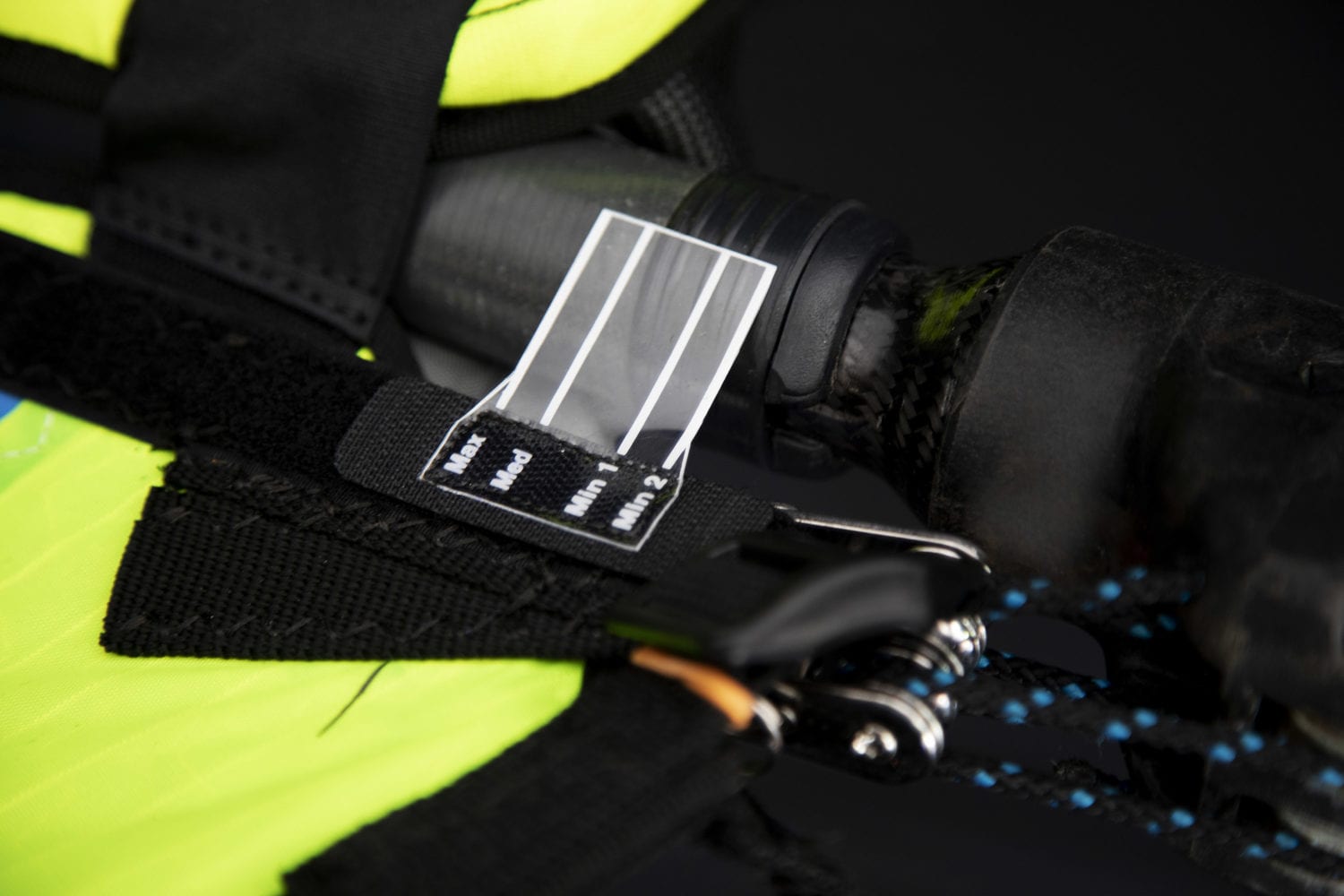
Downhaul until the mast base aligns with your preferred setting:
Max – strong wind / maximum control
Mid – all-around performance
Min 1 – early planing in light wind
Min 2 – extra power in marginal wind
Perfect tuning in seconds—every session.
EZZY WAVE SPECS
| EZZY WAVE | Luff | Luff | Boom | Battens | Ezzy Mast | Weight |
| Size (sq.m.) | Min (cm) | Max (cm) | Min-Max (cm) | Bottom/Top | Kilograms | |
| 2.8 | 325 | 329 | 127-137 | 4 | 315/340 | 2.22 kg |
| 3.0 | 338 | 342 | 139-149 | 4 | 315/340 | 2.30 kg |
| 3.4 | 351 | 355 | 139-149 | 4 | 340/340 | 2.40 kg |
| 3.7 | 364 | 368 | 145-155 | 4 | 340/340 | 2.51 kg |
| 4.0 | 372 | 376 | 145-155 | 4 | 340/370 | 2.75 kg |
| 4.2 | 380 | 384 | 145-155 | 4 | 370/370 | 2.75 kg |
| 4.5 | 389 | 393 | 150-160 | 4 | 370/370 | 2.85 kg |
| 4.7 | 397 | 401 | 154-164 | 4 | 370/400 | 2.93 kg |
| 5.0 | 407 | 411 | 159-169 | 4 | 370/400 | 3.01 kg |
| 5.2 | 415 | 419 | 163-173 | 4 | 400/400 | 3.11 kg |
| 5.5 | 423 | 427 | 168-178 | 4 | 400/430 | 3.18 kg |
| 5.8 | 438 | 442 | 171-181 | 5 | 430/430 | 3.48 kg |
| 6.3 | 454 | 458 | 178-188 | 5 | 430/430 | 3.65 kg |
Note on Ezzy Masts
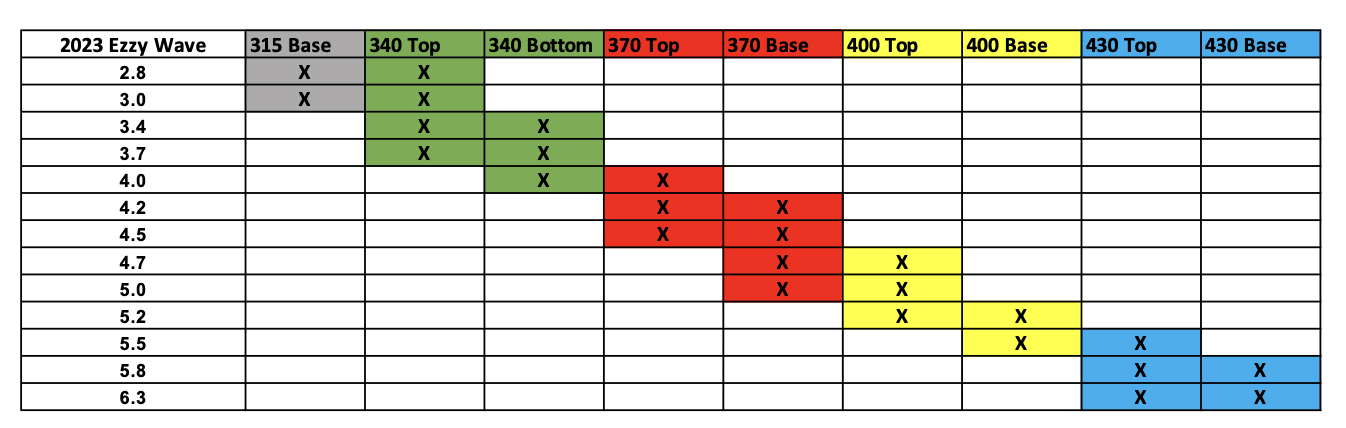
The recommended masts found in the Sail Specs refer to the Ezzy Ho'okipa masts and the Legacy masts. By using the recommended Ezzy mast in your sail, not only do you access 100% of the sail's performance but you also can use the calibrated rigging without any hassle.
Ezzy Sails are designed to be used with Ezzy Masts, but the sails will also work with a variety of other masts (RDM and SDM). Ezzy mast bend curves are constant curve with tip: 75% to 79% and base: 62% to 65%. Note: this is not carbon content. This is percentage bend relative to the midpoint bend.
The Ezzy Hookipa Mast
HOW DOES CALIBRATED RIGGING WORK?
Every Ezzy Wave is calibrated in the factory so that you can tune your sail accurately in seconds. If you have the recommended Ezzy mast, all you need to do is:
- Downhaul until the bottom of the mast lines up with the amount of tension you want, as indicated by the gauge on the sail. Max is for stronger wind, and Min is for lighter winds.
- That's it! Get on the water.
What if you don't have the recommended Ezzy mast? No problem. Follow these steps to calibrate your sail yourself:
- Set your mast extension to the medium extension height.
- Slide your mast into the luff sleeve, making sure the mast sits above the battens. Do not apply any outhaul.
- Begin downhauling slowly while observing the front of the foot batten. Continue downhauling just until the front of the foot batten “pops” to the side of the mast and then stop downhauling.
- This is your medium wind setting.
- Now, remove the downhaul gauge from the velcro and move it so that the medium mark lines up with the bottom of your mast.
- The downhaul gauge is set. From now on, just downhaul until the gauge lines up with the bottom of your mast.
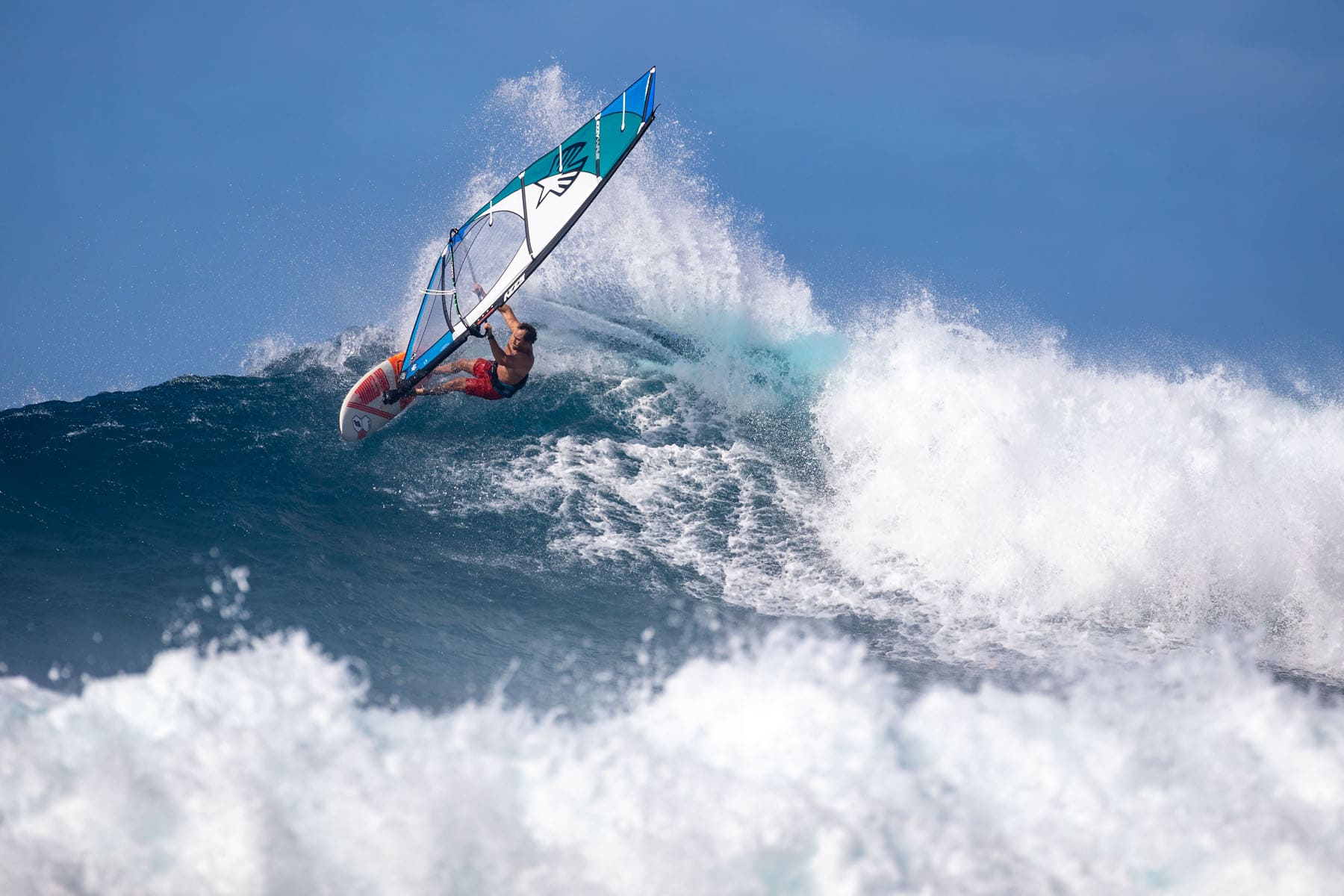

A portion of every sail we sell goes to help schools in Sri Lanka.
Click on the image to read more about the Ezzy Foundation!